French-inspired · Easy
Simple French Crêpes
Make thin, tender French crepes with a simple batter, a short rest, and clear pan cues for easy flipping, filling, and make-ahead prep.
- Prep
- 10 mins
- Cook
- 15 mins
- Total
- 40 mins
- Servings
- 8
Total includes 15 minutes of batter resting.
About this recipe
This French crepe recipe uses a pourable, lightly sweetened batter for thin crepes that stay flexible enough to roll or fold. A 15-minute rest hydrates the flour, while a measured pour and a properly heated skillet help each crepe cook evenly without becoming thick or brittle.
Why this crepe batter works
- The ratio of milk to flour keeps the crepe batter fluid enough to spread across the pan before it begins to set.
- Adding the liquid gradually makes it easier to whisk out flour pockets without overworking the batter.
- A short rest hydrates the flour and lets larger bubbles from mixing settle, which supports a smoother surface.
- Swirling the pan immediately creates a thin layer with flexible centers and lightly crisp edges.
Ingredient notes
- All-purpose flour
- Spoon it into the measuring cup and level the top. A packed cup adds excess flour and makes the batter too thick to swirl.
- Whole milk
- Its fat adds tenderness. Two-percent milk also works, though the finished crepes may taste slightly less rich.
- Eggs
- Two large eggs give the thin batter enough structure to lift and flip without adding chemical leavening.
- Melted butter
- Let it cool before whisking it into the eggs and milk so the mixture stays smooth.
- Sugar and vanilla
- The small amounts make these crepes suited to sweet fillings. Omit both for a neutral savory batch.
- Neutral oil
- Use only a thin film on the skillet. Visible pools of fat create patchy browning and can make the batter slide instead of spread.
Why rest crepe batter
Rest the batter for 15 minutes at room temperature after whisking. This pause gives the flour time to absorb the milk and lets many of the air bubbles rise. The batter may thicken slightly as it sits; whisk it once before cooking and add 1 tablespoon of milk only if it no longer pours easily.
How thin the batter should be
The batter should flow in a steady ribbon and spread as soon as the skillet tilts, similar to heavy cream. It should not sit in a mound like pancake batter. If a test crepe is thick and cannot cover the pan, whisk in milk 1 tablespoon at a time. If it tears even after the first side is set, avoid adding more liquid.
Set the pan temperature
Preheat the skillet over medium heat, then brush on a barely visible layer of oil or butter. The batter should begin to set on contact but still give you several seconds to swirl it to the edge. If it turns dark before the top dries, lower the heat. If it stays pale and soft after 90 seconds, raise the heat slightly before the next crepe.
Use the first crepe as a test
The first crepe shows whether the pan is hot enough, lightly greased, and receiving the right amount of batter. A tear usually means the underside needs more time to set or the pan is too cool. Sticking points to an unseasoned surface, too little fat, or an attempt to flip too early. A thick result needs less batter or a slightly looser mixture.
Sweet and savory serving ideas
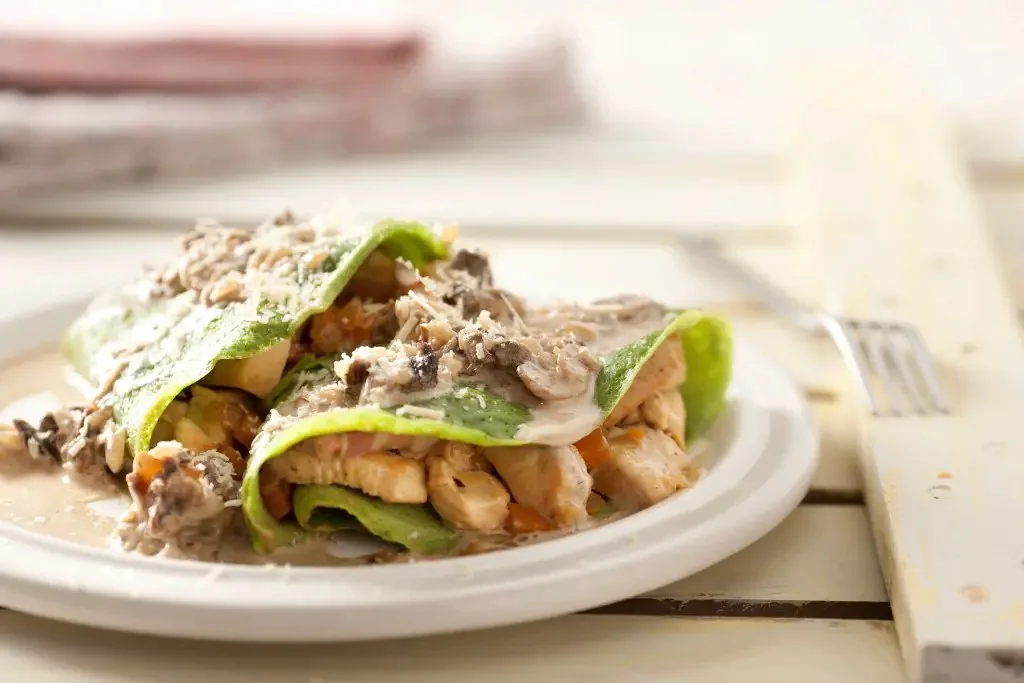
For a sweet breakfast or dessert, fold the crepes around sliced fruit, lemon and sugar, jam, or a modest spoonful of chocolate spread. For a savory meal, omit the sugar and vanilla, then fill with sautéed mushrooms, soft herbs, cheese, or cooked spinach. Keep wet fillings light so the thin crepes do not become soggy.
Simple Home Dish
Simple French Crêpes
- Prep
- 10 mins
- Cook
- 15 mins
- Total
- 40 mins
- Servings
- 8
Total includes 15 minutes of batter resting.
Ingredients
- 1 cup all-purpose flour, spooned and leveled
- 2 large eggs
- 1 1/4 cups whole milk
- 2 tablespoons unsalted butter, melted and cooled
- 1 tablespoon granulated sugar
- 1 teaspoon vanilla extract
- 1/4 teaspoon fine salt
- 1 teaspoon neutral oil or extra butter for the skillet
Instructions
- Whisk the flour, sugar, and salt in a medium bowl. In a separate bowl, whisk the eggs, milk, melted butter, and vanilla until smooth.
- Slowly pour the liquid mixture into the flour, whisking constantly until a thin, lump-free batter forms (consistency of heavy cream). Rest the batter for 15 minutes at room temperature.
- Heat an 8- or 10-inch nonstick skillet or crêpe pan over medium heat. Lightly brush with a tiny amount of oil or butter.
- Pour 3 to 4 tablespoons of batter into the center and immediately swirl the skillet in a circular motion so the batter coats the bottom in a thin, even layer.
- Cook for 60 to 90 seconds until the top looks dry and the edges begin to curl and turn lightly golden. Gently loosen the edges with a thin spatula, flip, and cook for another 30 seconds. Transfer to a warm plate and repeat with remaining batter.
Step-by-step notes
- The batter should pour like heavy cream. If it thickens while resting, whisk in 1 tablespoon milk.
- Lift the skillet from the heat while pouring and swirling, then return it to the burner once the base is coated.
- Stack finished crêpes on a plate and cover loosely with a clean towel so they remain flexible.
Cooking tips
Make ahead
Whisk the batter, cover it, and refrigerate for up to 24 hours. Stir gently before cooking and add a small splash of milk if it has thickened. Cooked crêpes can also be stacked, covered, and refrigerated.
Storage & reheating
Cool the crepes before stacking so trapped steam does not make them damp. Refrigerate the covered stack for up to 3 days, with parchment between crepes if they tend to stick. Freeze a wrapped stack for up to 2 months. Thaw in the refrigerator and warm one at a time in a dry skillet over medium-low heat for about 20 seconds per side.
Variations
For savory crepes, omit the sugar and vanilla, then add 1 tablespoon finely chopped chives or parsley if desired. For a less sweet base that can go either direction, keep the vanilla but reduce the sugar to 1 teaspoon.
Keep cooking
Frequently asked questions
Why is my first crepe always imperfect?
The first crepe tests the skillet temperature, fat coating, and batter amount. Treat it as useful feedback, then adjust one variable before pouring the second crepe.
Why are my crepes tearing?
The pan may be too cool, the first side may need several more seconds, or the batter may be overly thin. Wait until the top looks dry and the edge releases cleanly before sliding in the spatula.
Why are my crepes too thick?
Use a little less batter and swirl immediately. If the mixture will not travel across the tilted pan, whisk in milk 1 tablespoon at a time until it pours like heavy cream.
Why do the edges turn dry?
The skillet may be too hot or the crepe may be cooking too long. Lower the heat slightly and remove each crepe as soon as the second side has set.
Do I need a crepe pan?
No. An 8- or 10-inch nonstick skillet with a flat base gives most home cooks enough room to swirl and makes the thin crepes easier to release.
Can I make the batter the night before?
Yes. Cover and refrigerate it for up to 24 hours. Stir gently before cooking and add a small splash of milk only if the chilled batter has become too thick to swirl.