Argentine · Moderate
Argentine Bread Pudding (Budín de Pan)
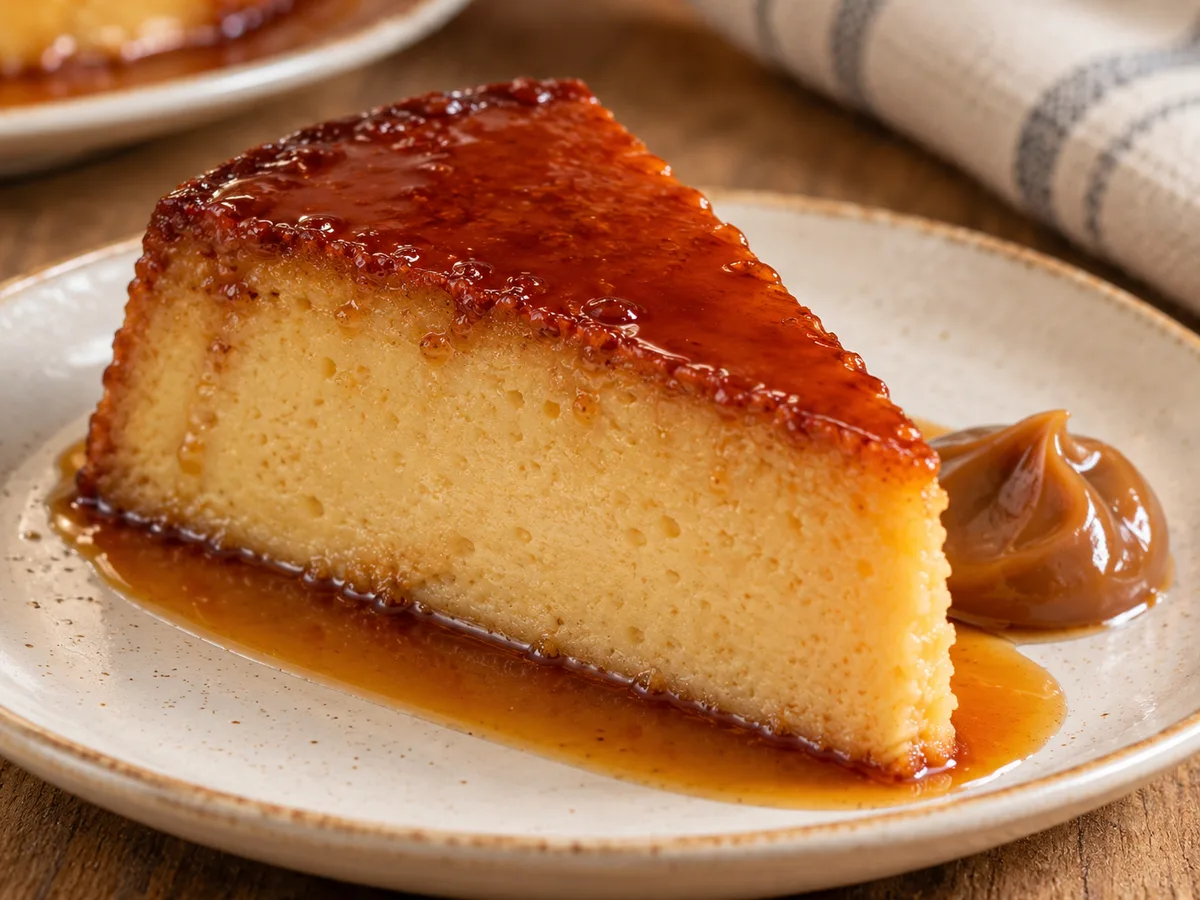
Make Argentine budín de pan: a smooth, sliceable bread pudding baked in a caramel-lined loaf pan and served chilled like flan.
- Prep
- 30 mins
- Cook
- 75 mins
- Total
- 345 mins
- Yield
- 10 slices
Total includes a 20-minute bread soak, 1 hour of cooling, and the minimum 3-hour chill. Overnight chilling is recommended.
About this recipe
Argentine budín de pan turns stale bread, milk, eggs, and sugar into a smooth custard baked over caramel. Unlike a chunky American bread pudding served warm from a casserole, this Rioplatense-style dessert is blended, baked gently in a water bath, chilled, and inverted so the caramel becomes its glossy top. The result is custardy but firm enough to cut into clean slices.
Explore more Argentine desserts in the world recipes collection, including chocotorta, alfajores de maicena, and quince-filled pasta frola bars.
Why this Argentine method works
- Soaking stale white bread in warm milk hydrates it fully before blending, preventing dry pieces in the finished custard.
- A moderate oven and hot-water bath buffer the heat around the loaf pan, helping the egg custard set evenly without a tough edge.
- Cooling and chilling before unmolding firms the pudding and gives the caramel time to loosen into a sauce.
Ingredient notes
- Stale white bread
- Use a plain unsweetened loaf with a fine crumb, such as French bread, Italian bread, or a basic sandwich loaf. Remove very hard crusts. Rich brioche makes a heavier, less traditional pudding.
- Whole milk
- Warm milk softens the bread quickly and supplies the liquid for the custard. It should be steaming but not boiling when poured over the bread.
- Eggs
- Five large eggs set this quantity of milk and bread into a sliceable pudding. Whisk them without incorporating excessive foam.
- Caramel
- The amber sugar coating is part of the dessert, not an optional sauce. Once the sugar syrup boils, avoid stirring; swirl the pan gently if the color develops unevenly.
How to make caramel without crystallizing
Combine the sugar and water before heating, then leave the syrup unstirred once it boils. Brushing sugar from the side of the saucepan with a wet pastry brush can prevent stray crystals from seeding the syrup. Remove the caramel at a medium amber color; very dark caramel tastes bitter, while pale caramel has less depth.
How to tell when budín de pan is done
The edges should look set and the center should wobble gently as one piece rather than ripple like liquid. A thin knife inserted near the center should come out without raw custard. The pudding continues to firm as it cools, so baking until the center is rigid can make the final texture rubbery.
Serving it the Argentine way
Serve the pudding cold or cool, with the caramel from the mold spooned over each slice. A small spoonful of dulce de leche on the side is traditional and especially useful when you want a richer dessert; it should complement rather than cover the caramel.
Simple Home Dish
Argentine Bread Pudding (Budín de Pan)
- Prep
- 30 mins
- Cook
- 75 mins
- Total
- 345 mins
- Yield
- 10 slices
Total includes a 20-minute bread soak, 1 hour of cooling, and the minimum 3-hour chill. Overnight chilling is recommended.
Ingredients
- 12 oz (340 g) day-old plain white bread, hard crusts removed and bread torn into pieces
- 4 cups (960 ml) whole milk
- 5 large eggs
- 3/4 cup (150 g) granulated sugar
- 2 teaspoons vanilla extract
- 1 teaspoon finely grated lemon zest
- 1/4 teaspoon fine salt
- 3/4 cup (150 g) granulated sugar, for the caramel
- 1/4 cup (60 ml) water, for the caramel
- Dulce de leche, for serving, optional
Instructions
- Place the bread in a large bowl. Warm the milk until steaming but not boiling, pour it over the bread, and press the pieces under the surface. Let stand for 20 minutes, stirring once, until fully softened.
- Heat the oven to 325°F (165°C). Set a 9-by-5-inch metal loaf pan near the stove and place a deep roasting pan in the oven. Bring a kettle of water to a boil for the water bath.
- Combine 3/4 cup sugar and 1/4 cup water in a small light-colored saucepan. Bring to a boil over medium heat without stirring. Cook until medium amber, swirling the pan gently if needed. Immediately pour into the loaf pan and tilt carefully to cover the bottom. Let harden.
- Blend the soaked bread and milk with an immersion blender until mostly smooth. In another bowl, whisk the eggs, remaining 3/4 cup sugar, vanilla, lemon zest, and salt just until combined. Whisk in the bread mixture without creating a thick layer of foam.
- Pour the custard through a coarse strainer into the caramel-lined pan, pressing through any soft bread remaining in the strainer. Set the loaf pan in the hot roasting pan. Pour boiling water into the roasting pan until it reaches halfway up the loaf pan.
- Bake for 65 to 80 minutes, until the edges are set, the center has a gentle unified wobble, and a thin knife inserted near the center shows no raw custard. Remove the loaf pan from the water bath and cool on a rack for 1 hour.
- Cover and refrigerate for at least 3 hours, preferably overnight. Run a thin knife around the upper edge. Place a rimmed serving plate over the pan, invert both together, and lift away the pan. Spoon caramel over the slices and serve with a small amount of dulce de leche if desired.
Step-by-step notes
- Have the loaf pan ready before the caramel reaches amber. Caramel continues cooking off the heat, so pour it as soon as the color resembles deep honey.
- Blend only until the soaked bread is mostly smooth. A few tiny flecks are normal; large bread cubes would make this closer to American-style bread pudding.
- Set the loaf pan in the roasting pan before adding hot water. Pour the water around the mold carefully so none splashes into the custard.
- Chill the pudding thoroughly before unmolding. Loosen only the upper edge with a thin knife, then invert in one confident motion onto a rimmed plate that can hold the caramel sauce.
Cooking tips
Make ahead
Bake the pudding up to 2 days before serving and refrigerate it covered in its mold. Unmold it cold shortly before serving so the slice remains neat and the caramel stays on the plate.
Storage & reheating
Keep the pudding covered in the refrigerator at 40°F (4°C) or below and eat within 4 days. Return it to the refrigerator within 2 hours of serving. Freezing is not preferred because the custard can release water and lose its smooth texture after thawing.
Variations
Add 1/3 cup raisins soaked in warm water and drained for a common variation, folding them in after blending. For the smoothest flan-like version shown here, leave the fruit out. Orange zest can replace lemon zest.
Keep cooking
Frequently asked questions
What kind of bread should I use for Argentine bread pudding?
Use day-old plain white bread with a fine crumb, such as a basic French, Italian, or sandwich loaf. Remove very hard crusts so the mixture blends smoothly.
Why bake bread pudding in a water bath?
The hot water moderates the heat around the loaf pan. That helps the egg custard set evenly and reduces the chance of a tough edge surrounding a liquid center.
Can I serve budín de pan warm?
It can be served cool, but chilling gives this version its cleanest slices and makes unmolding more reliable. It is traditionally served with its caramel, often with dulce de leche on the side.
Why did my caramel stay in the pan?
The pudding may have been unmolded before chilling or the caramel may have cooked very dark and hard. Let the cold mold stand for 5 minutes, then warm the bottom briefly over a towel dampened with hot water before inverting again.